


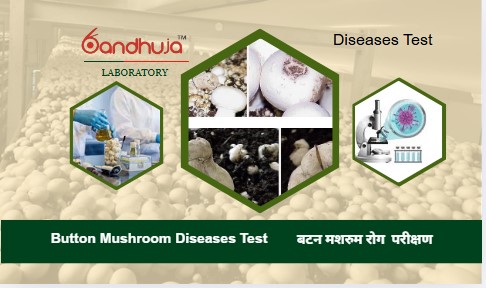
Description
Testing for Button Mushroom Diseases
Button mushrooms (Agaricus bisporus) can be affected by several diseases that affect yield and quality. Early detection and management are essential for maintaining profitable production. Here’s a comprehensive overview of diseases that affect button mushrooms and the testing methods used for their identification.
Testing and Detection Methods
We employ several techniques to diagnose button mushroom diseases:
Microscopy: Observation of spores and mycelial structures.
Molecular Techniques: RT-PCR, qRT-PCR for detecting viral RNA and identifying bacterial strains.
Culturing: Isolating fungi on PDA (Potato Dextrose Agar) media.
Key Disease Diagnostic Capabilities
We specializing in mushroom pathology focus on identifying the following, often using molecular techniques
like PCR or sequencing for precise identification:
Fungal Pathogens: Detection of LecanicilliumMycogoneCladobotryum, and Trichoderma in casing soil and compost.
Bacterial Pathogens: Identification of Pseudomonas tolaasii (bacterial blotch) and Ewingella americana
(internal stipe necrosis).
Vector Analysis: Testing for mites and sciarid flies that carry pathogens.
With ongoing research, improved detection methods and control strategies are making it easier for mushroom growers to manage diseases effectively, thus safeguarding their crops and profits.




Reviews
There are no reviews yet.